
Juil
17
2026
Non
How Fairhaven Engaged Its Community in Harbor Cleanup with IADYS’ Jellyfishbot
Introductory summary
Discover how Fairhaven became the first community on the U.S. East Coast to deploy an autonomous Jellyfishbot for floating waste collection and oil spill response—and how local residents helped choose and name the robot.
Fairhaven, Massachusetts, needed a more effective way to keep its harbor free from floating waste while strengthening its ability to respond to accidental oil spills. Debris regularly accumulated in areas that were difficult to reach using conventional equipment, and a previous diesel spill from a commercial fishing vessel had highlighted the need for a solution that could be deployed quickly.
Rather than approaching the project as a purely technical procurement, Fairhaven placed community participation at the heart of the initiative. Residents helped select the project and were later invited to name the town’s new aquatic robot.
In 2025, Fairhaven became the first community on the East Coast of the United States to deploy IADYS’ autonomous Jellyfishbot. Named Bumblebee by local residents, the robot was selected to support routine floating waste collection, first-response oil spill operations, water quality monitoring, and bathymetric surveys.
Rather than approaching the project as a purely technical procurement, Fairhaven placed community participation at the heart of the initiative. Residents helped select the project and were later invited to name the town’s new aquatic robot.
In 2025, Fairhaven became the first community on the East Coast of the United States to deploy IADYS’ autonomous Jellyfishbot. Named Bumblebee by local residents, the robot was selected to support routine floating waste collection, first-response oil spill operations, water quality monitoring, and bathymetric surveys.
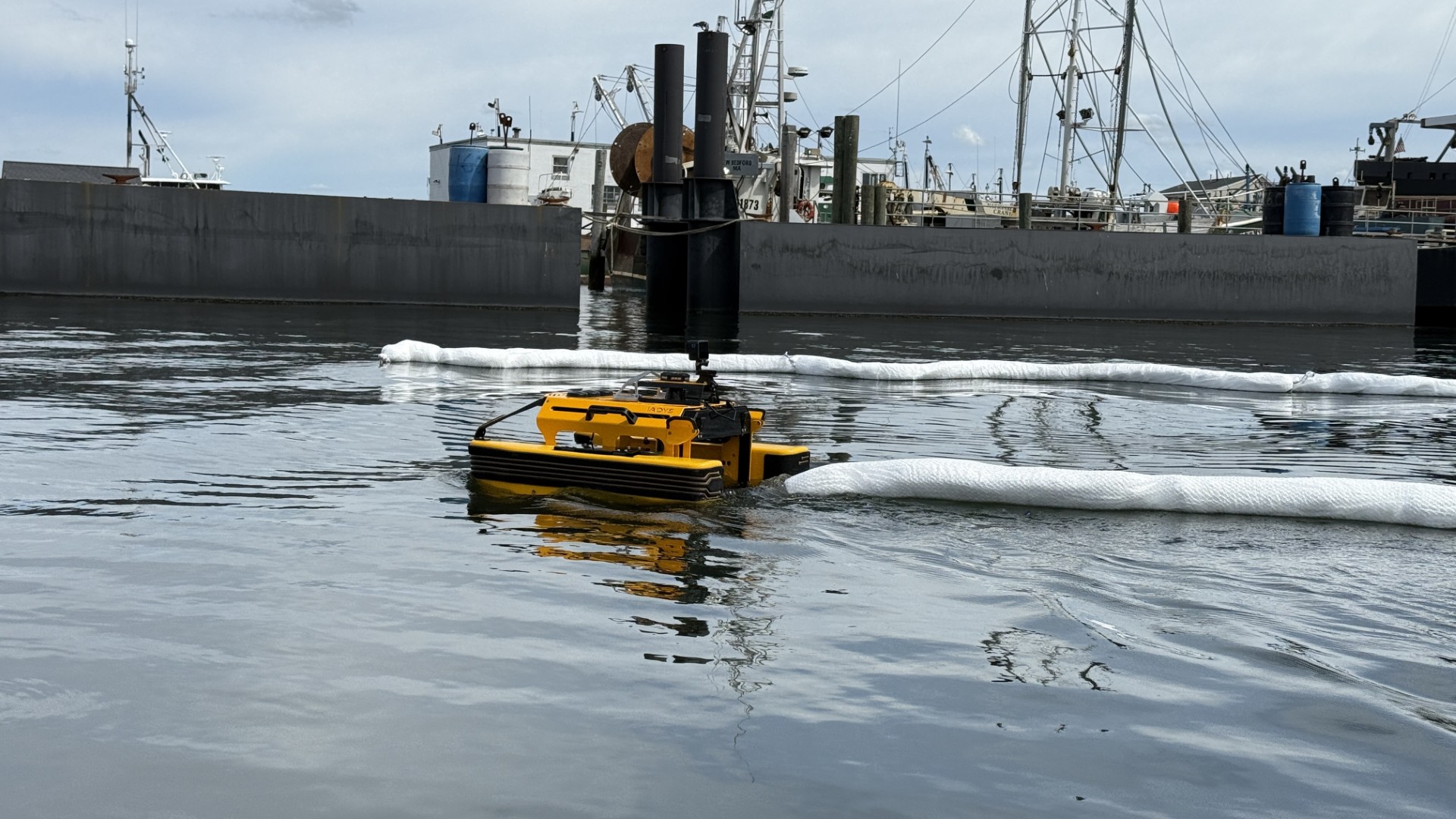
The Jellyfishbot, in the marina of Fairhaven, MA.
Why Did Fairhaven Need a New Harbor Cleanup Solution?
Like many coastal communities, Fairhaven faced several forms of pollution in its local waters. Floating debris could accumulate throughout the harbor and eventually reach the shoreline, particularly in harder-to-access areas near Fort Phoenix and Marsh Island.
These locations could be difficult to clean efficiently with conventional vessels or manual methods. Fairhaven therefore needed a compact solution capable of reaching harbor corners where waste regularly gathered and collecting it directly from the water before it washed ashore.
The town also wanted to improve its readiness for accidental hydrocarbon spills. Two years before the Jellyfishbot project was launched, a commercial fishing vessel suffered a major diesel fuel spill in Fairhaven Harbor. The incident required the fuel to be contained and removed and demonstrated the importance of having a response tool immediately available.
Fairhaven’s objective was therefore twofold: improve the day-to-day collection of floating waste while gaining a rapid first-response capability for accidental oil and fuel spills.
These locations could be difficult to clean efficiently with conventional vessels or manual methods. Fairhaven therefore needed a compact solution capable of reaching harbor corners where waste regularly gathered and collecting it directly from the water before it washed ashore.
The town also wanted to improve its readiness for accidental hydrocarbon spills. Two years before the Jellyfishbot project was launched, a commercial fishing vessel suffered a major diesel fuel spill in Fairhaven Harbor. The incident required the fuel to be contained and removed and demonstrated the importance of having a response tool immediately available.
Fairhaven’s objective was therefore twofold: improve the day-to-day collection of floating waste while gaining a rapid first-response capability for accidental oil and fuel spills.
How Did the Community Help Shape the Project?
The Jellyfishbot project was developed as part of a broader collaboration between Fairhaven’s Land Use & Planning Department, the Marine Resources Department, the Southeastern Regional Planning and Economic Development District, and the Massachusetts Executive Office of Energy and Environmental Affairs.
The initiative was funded through the state’s Municipal Vulnerability Preparedness 2.0 program, which incorporated public input into the project-selection process. Fairhaven residents were invited to vote among six proposed environmental and community initiatives.
The options included projects related to rainwater harvesting, public cooling spaces, community services, seasonal programming, and the deployment of an aquatic cleaning robot. The Jellyfishbot received the most public support and was ultimately selected for implementation.
Residents were not expected to carry out the cleanup themselves. Instead, they helped determine the town’s environmental priorities and supported the adoption of a practical solution for improving local water quality. This participatory process helped establish the project as a community-led initiative rather than simply a new piece of municipal equipment.
The initiative was funded through the state’s Municipal Vulnerability Preparedness 2.0 program, which incorporated public input into the project-selection process. Fairhaven residents were invited to vote among six proposed environmental and community initiatives.
The options included projects related to rainwater harvesting, public cooling spaces, community services, seasonal programming, and the deployment of an aquatic cleaning robot. The Jellyfishbot received the most public support and was ultimately selected for implementation.
Residents were not expected to carry out the cleanup themselves. Instead, they helped determine the town’s environmental priorities and supported the adoption of a practical solution for improving local water quality. This participatory process helped establish the project as a community-led initiative rather than simply a new piece of municipal equipment.

Bumblebee (Jellyfishbot) the community choice of Fairhaven
Why Did Fairhaven Choose IADYS’ Jellyfishbot?
Following the public vote, Fairhaven conducted a competitive selection process involving five international manufacturers: three European companies and two Chinese companies.
The town needed a solution that could meet several operational requirements within a single platform. The selected robot had to be capable of collecting floating waste, supporting oil spill response, navigating autonomously, and detecting and avoiding obstacles.
IADYS was selected because the Jellyfishbot met all of these requirements. Its compact design, interchangeable collection equipment, autonomous navigation capabilities, and environmental monitoring functions made it suitable for both routine harbor maintenance and emergency response.
Fairhaven purchased the Jellyfishbot using $50,000 in MVP 2.0 funding awarded through the Massachusetts Executive Office of Energy and Environmental Affairs.
The town needed a solution that could meet several operational requirements within a single platform. The selected robot had to be capable of collecting floating waste, supporting oil spill response, navigating autonomously, and detecting and avoiding obstacles.
IADYS was selected because the Jellyfishbot met all of these requirements. Its compact design, interchangeable collection equipment, autonomous navigation capabilities, and environmental monitoring functions made it suitable for both routine harbor maintenance and emergency response.
Fairhaven purchased the Jellyfishbot using $50,000 in MVP 2.0 funding awarded through the Massachusetts Executive Office of Energy and Environmental Affairs.
A Versatile Aquatic Robot for Harbor Cleaning and Spill Response
Weighing approximately 45 pounds and roughly the size of a small lawnmower, the Jellyfishbot provides Fairhaven with a compact, adaptable platform for several harbor-management missions.
Depending on the equipment installed and the task assigned, Bumblebee can collect floating debris, support hydrocarbon recovery, monitor water conditions, and conduct bathymetric surveys.
Its small size also allows it to operate in areas that may be difficult or inefficient to reach with larger vessels.
Depending on the equipment installed and the task assigned, Bumblebee can collect floating debris, support hydrocarbon recovery, monitor water conditions, and conduct bathymetric surveys.
Its small size also allows it to operate in areas that may be difficult or inefficient to reach with larger vessels.
Floating Waste and Microplastic Collection
The Jellyfishbot can tow specialized and interchangeable nets designed to collect different categories of floating pollution.
These nets can target visible items such as cups, packaging, and other floating debris, as well as smaller plastic particles present near the surface of the water. This allows Fairhaven to adapt the robot’s equipment according to the type and size of pollution present in a particular area.
By collecting debris directly from the harbor, Bumblebee can help prevent floating waste from spreading further or reaching the shoreline.
These nets can target visible items such as cups, packaging, and other floating debris, as well as smaller plastic particles present near the surface of the water. This allows Fairhaven to adapt the robot’s equipment according to the type and size of pollution present in a particular area.
By collecting debris directly from the harbor, Bumblebee can help prevent floating waste from spreading further or reaching the shoreline.
A First-Response Tool for Oil Spills
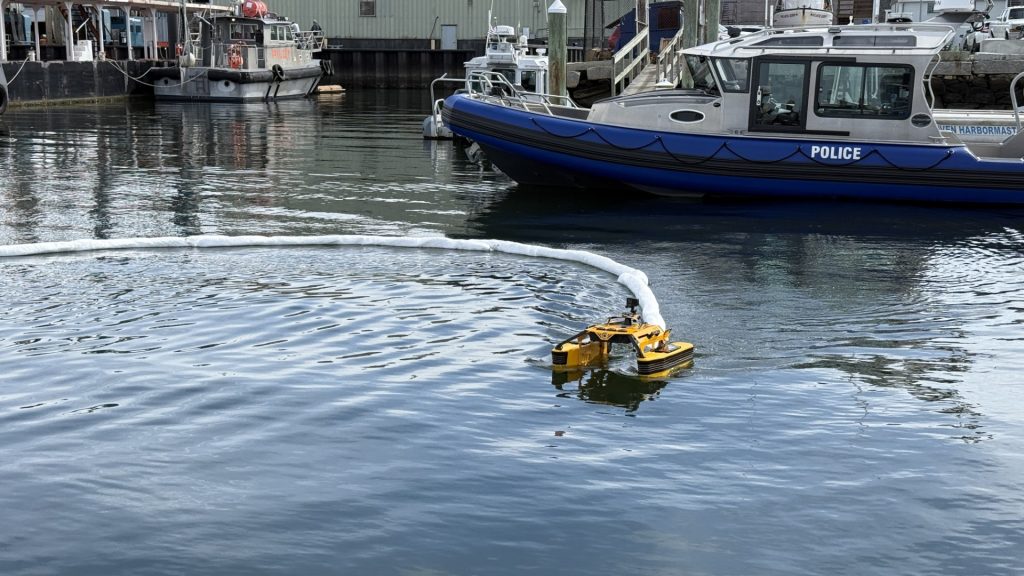
For accidental oil or fuel spills, the Jellyfishbot can deploy absorbent materials designed to capture hydrocarbons from the surface of the water.
This gives Fairhaven access to a locally available first-response tool that can be deployed rapidly following a pollution incident. The robot can help contain and collect hydrocarbons before they spread throughout the harbor and affect a larger area.
The Jellyfishbot is not intended to replace every component of a large-scale emergency response operation. However, it provides the town with an immediately deployable solution for reducing the initial impact of an accidental spill.
This gives Fairhaven access to a locally available first-response tool that can be deployed rapidly following a pollution incident. The robot can help contain and collect hydrocarbons before they spread throughout the harbor and affect a larger area.
The Jellyfishbot is not intended to replace every component of a large-scale emergency response operation. However, it provides the town with an immediately deployable solution for reducing the initial impact of an accidental spill.
Autonomous Navigation and Environmental Monitoring
Bumblebee can be programmed to operate within predefined zones of the harbor. During a mission, the robot can detect vessels and other obstacles and adjust its trajectory in real time to move safely out of their way.
The robot is also equipped with a beacon and a horn to improve its visibility and support safe operation around other harbor users.
Beyond pollution collection, the Jellyfishbot can conduct water quality monitoring and bathymetric surveys. These additional functions make it a multipurpose environmental platform rather than a robot dedicated solely to collecting floating waste.
The robot is also equipped with a beacon and a horn to improve its visibility and support safe operation around other harbor users.
Beyond pollution collection, the Jellyfishbot can conduct water quality monitoring and bathymetric surveys. These additional functions make it a multipurpose environmental platform rather than a robot dedicated solely to collecting floating waste.
From Installation to Local Operations
IADYS’ U.S. team, based in Houston, installed the Jellyfishbot and trained Fairhaven staff to operate the equipment in August 2025.
The training enabled local personnel to prepare the robot, select the appropriate collection equipment, program operating areas, and supervise missions. Fairhaven’s Marine Resources Department was appointed to oversee the robot’s day-to-day use.
Following installation and training, Bumblebee was scheduled to begin operating in Fairhaven Harbor in September 2025. The robot was planned to be based at Union Wharf during the summer months, providing the municipal team with direct access to the harbor.
Fairhaven also began assessing whether Bumblebee could operate throughout the year. Because the town’s harbor generally remains free of ice, year-round deployment could enable the robot to support cleaning and environmental monitoring beyond the main boating season.
The training enabled local personnel to prepare the robot, select the appropriate collection equipment, program operating areas, and supervise missions. Fairhaven’s Marine Resources Department was appointed to oversee the robot’s day-to-day use.
Following installation and training, Bumblebee was scheduled to begin operating in Fairhaven Harbor in September 2025. The robot was planned to be based at Union Wharf during the summer months, providing the municipal team with direct access to the harbor.
Fairhaven also began assessing whether Bumblebee could operate throughout the year. Because the town’s harbor generally remains free of ice, year-round deployment could enable the robot to support cleaning and environmental monitoring beyond the main boating season.
Why Is the Robot Called Bumblebee?
Community participation continued after the Jellyfishbot had been selected.
To help create a sense of local ownership, Fairhaven invited residents to choose a name for the robot. Voting took place through an online poll and in person during the Huttleston HarborFest, an event organized by Discover Fairhaven, the town’s Office of Tourism, Community and Economic Development.
Hundreds of responses were submitted, and Bumblebee was announced as the winning name during the festival. The name gives the robot a recognizable local identity and complements its distinctive bright yellow-orange appearance.
By allowing residents to name the Jellyfishbot, Fairhaven transformed the robot from an unfamiliar piece of technology into a visible community asset. The initiative also created an opportunity to raise awareness about harbor pollution and communicate the town’s efforts to protect its coastline.
To help create a sense of local ownership, Fairhaven invited residents to choose a name for the robot. Voting took place through an online poll and in person during the Huttleston HarborFest, an event organized by Discover Fairhaven, the town’s Office of Tourism, Community and Economic Development.
Hundreds of responses were submitted, and Bumblebee was announced as the winning name during the festival. The name gives the robot a recognizable local identity and complements its distinctive bright yellow-orange appearance.
By allowing residents to name the Jellyfishbot, Fairhaven transformed the robot from an unfamiliar piece of technology into a visible community asset. The initiative also created an opportunity to raise awareness about harbor pollution and communicate the town’s efforts to protect its coastline.
Cleaner Waters, Faster Response and Stronger Community Ownership
With Bumblebee, Fairhaven has strengthened its ability to address both recurring harbor pollution and unexpected environmental incidents.
The robot is designed to help the town collect floating waste before it reaches the shoreline, access harbor areas where debris tends to accumulate, and respond more rapidly to accidental oil or diesel spills.
Its key expected benefits include:
– collecting floating debris directly from the harbor;
– improving access to difficult or confined areas;
– providing an immediately available first-response tool for hydrocarbon spills;
– supporting water quality monitoring and bathymetric surveys;
– reducing reliance on larger vessels for certain routine missions;
– increasing public awareness of local water pollution;
– encouraging a stronger sense of community ownership toward the coastline.
Fairhaven’s experience shows how autonomous technology, municipal action, and public participation can be combined within a single harbor-protection initiative. As the first community on the U.S. East Coast to deploy the Jellyfishbot, the town provides a practical example for other ports, marinas, and coastal authorities seeking a smarter approach to managing local water pollution.
The robot is designed to help the town collect floating waste before it reaches the shoreline, access harbor areas where debris tends to accumulate, and respond more rapidly to accidental oil or diesel spills.
Its key expected benefits include:
– collecting floating debris directly from the harbor;
– improving access to difficult or confined areas;
– providing an immediately available first-response tool for hydrocarbon spills;
– supporting water quality monitoring and bathymetric surveys;
– reducing reliance on larger vessels for certain routine missions;
– increasing public awareness of local water pollution;
– encouraging a stronger sense of community ownership toward the coastline.
Fairhaven’s experience shows how autonomous technology, municipal action, and public participation can be combined within a single harbor-protection initiative. As the first community on the U.S. East Coast to deploy the Jellyfishbot, the town provides a practical example for other ports, marinas, and coastal authorities seeking a smarter approach to managing local water pollution.
Could Your Community Benefit from a Smarter Harbor Cleanup Solution?
From routine floating waste collection to first-response support during accidental oil spills, IADYS’ aquatic robots can help ports, marinas, municipalities, and coastal communities protect their waters more safely and efficiently.
Discover how the Jellyfishbot could support your harbor-cleaning, pollution-response, and environmental-monitoring needs.
Discover how the Jellyfishbot could support your harbor-cleaning, pollution-response, and environmental-monitoring needs.